Maximizing Bicycle Infrastructure Connectivity
Algorithmic approach to connecting fragmented bicycle networks in cities using network science. Demonstrates how strategic infrastructure investments can dramatically improve connectivity with minimal new construction.
Project Overview
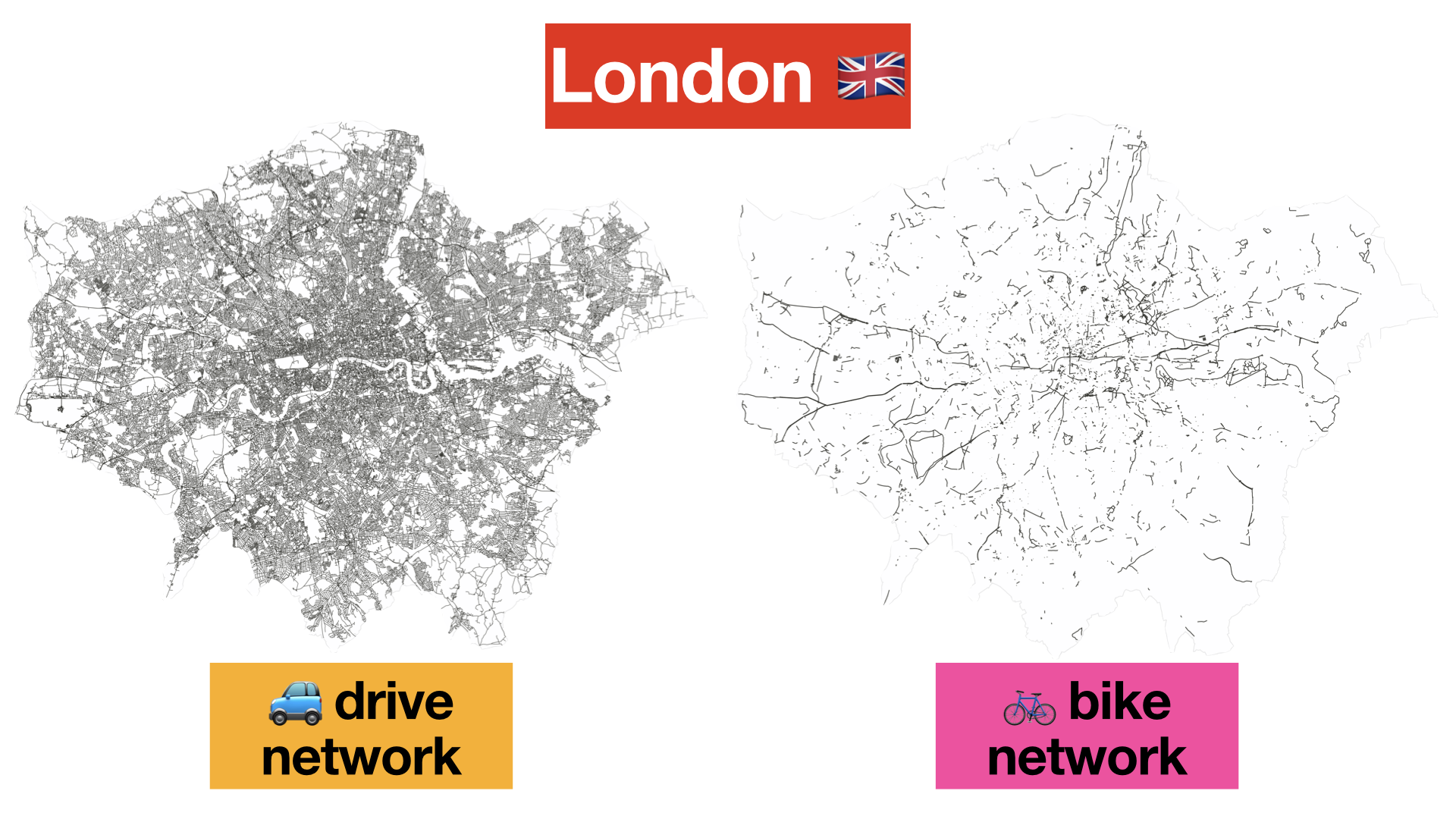
Cities worldwide struggle with fragmented bicycle infrastructure where networks exist in thousands of disconnected components. This project applies network science and a greedy connection algorithm to identify optimal connection points between network fragments. Using OpenStreetMap data and Python's NetworkX, and OSMnx libraries, the algorithm finds the shortest distances between the largest network components, enabling cities to strategically invest in new infrastructure. The Budapest case study showed that just five kilometers of new connections increased network connectivity from below 25% to over 50%—a substantial return on investment.
Key Features
Technologies
Built with Python and NetworkX for graph analysis and connected component identification. Leverages OpenStreetMap data for real-world bicycle network information. The methodology enables cities to simulate infrastructure changes and predict connectivity improvements before physical implementation, supporting evidence-based urban planning decisions.